
You grab a spatula almost every time you cook. You use it to flip the egg, stir the sauce, and scrape the bowl. Yet most people never think about what it is made of until a pan gets scratched or a spatula edge melts into dinner.
What is the best material for your spatula depends on what you cook, the pan you use, and how much heat you apply. In this guide, we’ll break down the strengths and trade-offs of each material so you can pick the best kitchen spatula for your cooking needs and to match your cookware.
What Is the Best Spatula Material? The Quick Answer
Many people prefer silicone spatulas over other materials. It handles high heat, will not scratch nonstick pans, and is easy to clean. But it is not perfect for every job. The wooden spatula fits nicely in the hand, it is quiet when mixing and you won’t burn yourself when you touch it. A thin metal spatula still wins for searing burgers, and for grilling.
Here is a simple spatula material comparison:
| Material | Heat limit | Nonstick safe? | Best for | Main downside |
|---|---|---|---|---|
| Silicone | 400–600°F | Yes | Everyday cooking, baking, scraping | Can be too soft for flipping heavy food, can pick up stains |
| Nylon | 400–425°F | Yes | Eggs, pancakes, light flipping | Can melt if left on a hot pan |
| Wood | Very high | Yes | Stirring, sauces | Needs hand washing |
| Bamboo | Very high | Yes | Stirring, sauces | Can split with age |
| Stainless steel | Very high | No | Grilling, burgers, searing | Scratches nonstick and ceramic |
Heat limits vary by brand. Always check the label on your before purchasing.
Silicone vs. Nylon Spatulas
These two are the most common picks for nonstick pans. They look alike, but they act differently on a hot stove.
Silicone spatulas are the heat-resistant champions of the kitchen, with most models tolerating temperatures of 450°F (230°C) or more. That makes them ideal for stirring sauces, scraping hot pans, and folding batters without any risk of melting. Their flexible, rubbery edges also hug the curves of bowls and pots, so you waste less food. Silicone is non-porous and gentle on nonstick coatings, though it can sometimes hold onto strong odors or oily residue over time.
Nylon spatulas, by contrast, are firmer and more rigid, which makes them excellent for flipping eggs, pancakes, and burgers. A thin nylon edge slides neatly under food, offering precision that a softer silicone blade can’t always match. They’re also typically more affordable. The trade off is heat tolerance: most nylon tools start to soften or warp around 400°F (200°C), and they can melt if left resting against a hot pan.
If you mostly stir, scrape, and bake, silicone is the more versatile option. If flipping and turning are your priorities, nylon is hard to beat. Many home cooks keep both on hand to cover every task.
Silicone vs. nylon: which is better?
| Silicone | Nylon | |
|---|---|---|
| Feel | Soft and flexible | Firm and stiff |
| Heat limit | Higher | Lower |
| Best for | Scraping, stirring, folding | Flipping, turning |
| Melts easily? | Rarely | Yes, near hot pan edges |
If you only want one, pick silicone. If you flip a lot, add a nylon turner with a thin edge.
One-piece silicone spatula
Silicone spatulas with a metal core in the handle strike a nice balance between flexibility and strength. The silicone head is heat-resistant, gentle on nonstick cookware, and soft enough to scrape a bowl or pan clean, while the steel core running through the handle keeps the tool from bending or going limp when you’re stirring something thick like cookie dough or a heavy risotto. That internal reinforcement also means the head is less likely to separate from the handle over time, a common weak point in cheaper one-piece silicone designs. The trade-off is that a metal core can make the spatula slightly heavier and a bit pricier. Still, for anyone who wants a durable, dishwasher-friendly tool that handles both delicate folding and heavy-duty mixing, a core-reinforced silicone spatula is hard to beat.
Wooden and Bamboo Spatulas
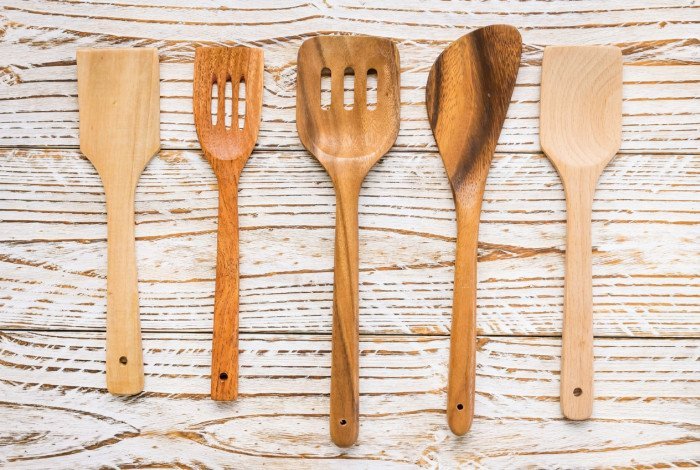
Wood and bamboo are two of the most popular natural options, and each has its own strengths. Traditional wooden spatulas, often made from beech, maple, or olive wood, are prized for their sturdy feel and classic look. They are gentle on nonstick cookware, stay cool in hot pans, and develop a pleasant patina over time. However, wood can be porous, meaning it may absorb odors, stains, and moisture if not properly cared for.
Bamboo offers a harder and denser surface that resists bacteria and moisture better than many hardwoods. Bamboo spatulas tend to be lighter and slightly more affordable, though their thin edges can splinter if mistreated.
If you value a warm, traditional feel with a bit more heft, wood is a lovely pick; if sustainability, durability, and a lightweight design matter most, bamboo deserves a spot in your kitchen drawer. Pick the one that feels smooth and has no rough spots.
Metal Spatulas: When They Work and When They Don’t
Metal is strong, thin, and slides under food with ease. It is the top choice for high heat. It easily handles open flames and high grill temperatures without melting, warping, or degrading. It won’t snap under heavy foods, allowing you to lift large steaks, burgers, or roasts.
But metal spatulas can do real damage on some delicate pans. Here is how it fares on each type of cookware:
| Cookware | Metal spatula OK? | What to know |
|---|---|---|
| Nonstick | No | Scratches the coating and shortens its life |
| Ceramic | No | Scratches and chips the surface |
| Enameled cast iron | Avoid | Can scratch or chip the enamel |
| Bare cast iron | Yes | Can even help scrape off stuck bits |
| Stainless steel | Yes | Handles it well; light marks are normal |
Best Spatulas for Cooking: Match the Material to the Job
The best spatulas for cooking change with the food.
| Job | Best pick | Why |
|---|---|---|
| Flipping eggs | Thin nylon or silicone turner | Slides under soft eggs without tearing |
| Pancakes | Wide nylon or silicone turner | Gives support for a full flip |
| Fish | Thin, flexible metal fish spatula | Fits under delicate fillets and holds their shape |
| Burgers | Stainless steel | Strong enough to lift and press |
| Grilling | Long stainless steel | Handles high heat and keeps your hand far away |
| Baking | Silicone | Folds batter and scrapes the bowl clean |
| Scraping bowls | One-piece silicone | Flexible edge reaches every corner |
| Stirring sauces | Wood | Heat resistant, gentle on the cooking surface |
| Air fryer | Silicone or wood | Safe for the basket coating |
A note on fish: if you cook it in a nonstick pan, use a thin nylon or silicone fish turner instead of metal.
Which spatula material is safest?
The safest spatula material is one that will not melt, chip or flake into your food. Good, food-grade silicone, wood and bamboo are all solid picks, and so is stainless steel on the right pan. Skip any spatula that is cracked, melted or smells odd, no matter what it is made of.
When should you replace a spatula?
Replace it when you see:
- Melted, chewed or warped edges
- Deep cracks or splits
- A sticky or greasy feel that will not wash off
- A smell that stays after washing
- Rough, splintery wood
What should You look for when buying a spatula?
- Material: Food-grade silicone is the safest all-around choice.
- Heat rating: Look for a clear number on the label.
- Design: One-piece builds are easier to clean.
- Edge: A thin, firm edge flips better.
- Handle: It should feel comfortable and stay cool.
- Your pans: Match the spatula to your cookware.
The Bottom Line
The best material for spatulas is the one that fits your pan and your task. Silicone is the best all-around pick. Add a stainless steel turner for searing and grilling, and a wooden spoon or spatula for sauces. With those three, you can cook almost anything without harming your cookware.

About the Author
Hi, I’m the creator of Two Tiny Spoons. I am a retired researcher who has spent over 10 years obsessing over cookware materials, food safety, and manufacturing standards. I don’t care about fancy recipes—I care about the science behind the tools we use. I independently vet every product to ensure it is non-toxic, durable, and truly worth your money.