
What Are Silicone Utensils Made of?
Silicone is a synthetic material created by combining silicon (a natural element found in sand and rocks) with oxygen, carbon, and hydrogen. In the process of making silicone utensils, liquid silicone is poured into molds to form items such as spatulas, spoons, tongs, and whisks. After that, the utensils go through a curing process (heating) to increase their strength and heat-resistance. High-quality products also undergo safety checks to confirm that they do not release harmful chemicals when used with food.
High-quality silicone is chemically inert and stable, and in 1979, the FDA (Food and Drug Administration) recognized it as a food-safe material.
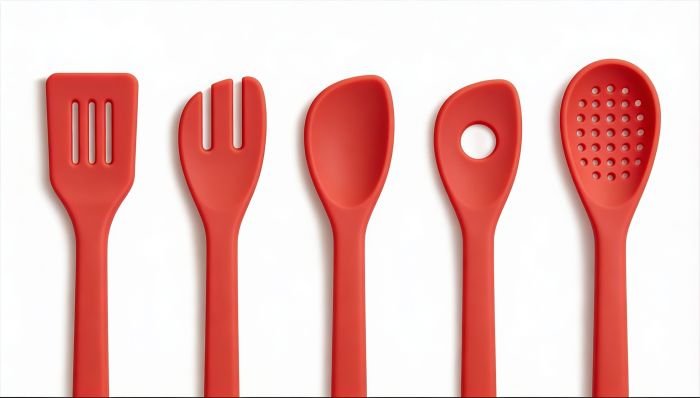
How Do Silicone Utensils Compare to Plastic Utensils?
When purchasing kitchen utensils, people often choose between silicone and plastic tools. Both materials are light and affordable, but there are big differences between them.
Heat resistance: Plastic utensils have lower heat tolerance. Plastic can melt, warp, or emit vapors when exposed to high temperatures. Silicone kitchenware is more reliable for high-temperature cooking because it can withstand much higher temperatures – up to 392–482°F without melting or losing shape.
Durability and Longevity: Plastic utensils can become brittle and break over time, especially after repeated exposure to high temperatures. If you want a longer-lasting option, silicone utensils are a better choice. Silicone utensils are strong and flexible and can save you money in the long run.
Environmental impact: Plastic utensils take hundreds of years to decompose, which greatly contributes to pollution. Silicone is also not biodegradable, but it is more durable and lasts longer, which means fewer discarded items and less waste.
Chemical leaching: Plastic utensils often contain chemicals like BPA, phthalates, or other additives that can leach into food, especially when used with hot liquids or oils. Over time, this can pose a health risk. On the other hand, food-grade silicone is much more stable and leaches fewer chemicals (if any) into food under normal use.
Do Silicone Utensils Have Microplastics?
Using plastic kitchenware can be harmful to you and your family. When plastic comes into contact with heat, it begins to release plastic particles into our food. Microplastics are a problem because they persist in the environment and have been shown to cause some negative health effects, such as inflammation and tissue damage.
On the other hand, silicone utensils are quite inert and do not break down easily. While these products can wear out over time, the particles are larger than microplastics, inert, and would be naturally eliminated by the body.
In short, silicone is considered a safer choice for use in the kitchen because it is more thermostable and chemically inert than plastic.
Advantages of Using Silicone Utensils
Heat resistance
Unlike wood, which is heat-resistant up to 400°F, or plastic, which can withstand heat up to 200°F, most kitchen-grade silicones are rated as safe up to 428°F–500°F. Silicone does not melt or burn at high temperatures. Silicone’s ability to tolerate heat is valuable in the kitchen. Silicone cookware and baking tools do not bend or melt in ovens and on stoves. Food-grade silicone won’t melt, leaning against the edge of a hot pan, and won’t leach chemicals into your food the way plastic utensils can when exposed to prolonged heat.
Easy maintenance
A big advantage of silicone kitchen utensils is that they are completely non-stick. Food particles do not stick to silicone tools, so cleaning and maintenance are simple and easy. Bacteria do not harbour and multiply on the smooth and non-porous surface. That’s why silicone utensils can be considered hygienic for food preparation.
Another plus is that silicone utensils can be safely washed in the dishwasher by placing them on the top rack. Quality silicone can handle both high water temperatures and strong detergents without breaking down.
Hand washing is also easy and simple. Most of the residue can be washed off with hot water. Soak Utensils with stubborn residues need to be soaked in warm soapy water for ten minutes.
Safe for delicate cookware surfaces
Metal utensils can damage non-stick and enameled cookware. The soft texture of silicone protects cookware surfaces. Silicone spatulas, whisks, and spoons will not scratch non-stick, ceramic, or enamel finishes while you stir food in a bowl or scrape a pan. This feature extends the life of your pots and pans. That’s why silicone utensils are the ideal choice for protecting your delicate cookware.
Flexibility and durability
Unlike wooden and metal utensils, silicone kitchen utensils will allow you to scrape the last bit of cake mix from the bowl. This is possible because silicone is incredibly flexible. The silicone utensils adapt to the shape of the bowl, maximizing food removal.
The tensile strength of silicone allows it to be bent repeatedly without tearing. Unlike wooden spoons that break or plastic tools that crack, silicone utensils return to their original shape after bending. Silicone utensils are very durable and maintain their integrity and shape through years of use.
Versatility
Silicone kitchenware offers versatility thanks to its high heat resistance (up to 600°F) and flexibility. Silicone utensils work for multiple cooking techniques and can be used with any cookware, including non-stick pots and pans. Silicone tools are Ideal for mixing, scraping, turning, and baking. You can use them to turn meat in a pan or stir hot soups and sauces without worrying about melting or deforming. One silicone spatula can replace several other cooking tools, so you’ll need fewer utensils in the kitchen.
What Are The Disadvantages of Silicone Utensils?
Silicone utensils have many advantages, but they are not perfect. There are some kitchen tasks for which silicone utensils are not a good choice.
- Not suitable for cooking over direct flames: Silicone utensils should not touch open flames, grill grates, or hot pans.
- Aesthetic limitations: Some people find silicone utensils less elegant compared to wood or stainless steel.
- Odor retention and stains: Strongly colored foods like curry, turmeric, and tomato sauce can leave stains or odors on silicone utensils.
- Flexibility issue: Some people may find the flexibility of silicone utensils to be a disadvantage, as they may feel less control while cooking. Utensils made of silicone with a metal or wooden handle can provide both stability and flexibility.
How Safe Are Silicone Utensils?
Silicone utensils are generally safe to use for cooking and baking as long as they are made of food-grade silicone. To meet FDA standards, the silicone must be manufactured without BPA, BPS, and other harmful plasticisers. Kitchen utensils made of food-grade silicone do not leach harmful chemicals under normal cooking conditions.
However, low-quality products may contain additives, such as plasticizers or colorants, that could potentially be harmful.
What scientific research says
Silicone products are relatively new to the market. As a result, very few studies have been conducted on their safety. While food-grade silicone is generally considered safe for food contact, it is important to note that there is not enough evidence that silicone bakeware and utensils are completely safe when used at high temperatures.
Recent studies have raised concerns that chemicals in silicone can leach into greasy and fatty foods when exposed to temperatures above 296°F.
Some studies have shown that heating silicone bakeware above 392°F can release toxic chemicals called siloxanes into your food and the air.
A possible explanation is that manufacturers may not be properly “drying” their silicone bakeware before selling it.
To avoid any potential consequences, consumers need to heat all new silicone bakeware to 428°F without food in it for several hours. Once cooled, the bakeware should be thoroughly washed in warm soapy water, rinsed, and dried.
Is Silicone Kitchenware Safe for the Environment?
Silicone kitchenware may not be an environmentally friendly choice because silicone is not biodegradable and has a low level of recyclability. Manufacturing is energy-demanding and has a significant carbon footprint. Compared to plastic, which is a petroleum-based material, silicone is made from natural elements found in sand and rocks, but it still relies on hydrocarbons derived from petroleum, a non-renewable resource. After being discarded, silicone items will sit in a landfill where they can persist for hundreds of years. Although silicone is a safer alternative to plastic, it is not perfectly environmentally friendly.
How to Choose Safe Silicone Utensils?
- When buying silicone accessories, pay attention to the quality. Food-grade silicone is smooth, flexible, and feels heavy, while low-grade versions may emit odors or show white streaks when twisted.
- Look for items that are “100% food grade” or “LFGB-certified”, which is a German food safety standard and is generally stricter than FDA standards.
- Avoid very cheap or unknown brands due to potential safety risks from fillers. Reputable companies offer detailed specifications regarding materials, drying methods, and temperature limits.
- Finally, look for the statement that the product is made of platinum-cured silicone. They produce fewer residual chemicals than peroxide-cured versions.
How to Properly Use Silicone Utensils for Cooking
Although food-grade silicone is generally safe for cooking, it is important to follow a few guidelines:
- Be sure to wash all silicone products before use – this will reduce the amount and likelihood of residual chemicals entering the food or air.
- Check the maximum temperature the silicone product can withstand, and do not exceed this limit. Food-grade silicone is very heat-resistant and can usually withstand a wide range of temperatures, from -40°F. to 428°F. Beyond that upper limit, the silicone can begin to degrade, change color, emit fumes, or become brittle.
- You should also clean silicone utensils regularly to prevent oil build-up, which can contribute to degradation over time. If you put silicone utensils in the dishwasher, be sure to put them in the upper rack to avoid being close to heating elements.

About the Author
Hi, I’m the creator of Two Tiny Spoons. I am a retired researcher who has spent over 10 years obsessing over cookware materials, food safety, and manufacturing standards. I don’t care about fancy recipes—I care about the science behind the tools we use. I independently vet every product to ensure it is non-toxic, durable, and truly worth your money.