
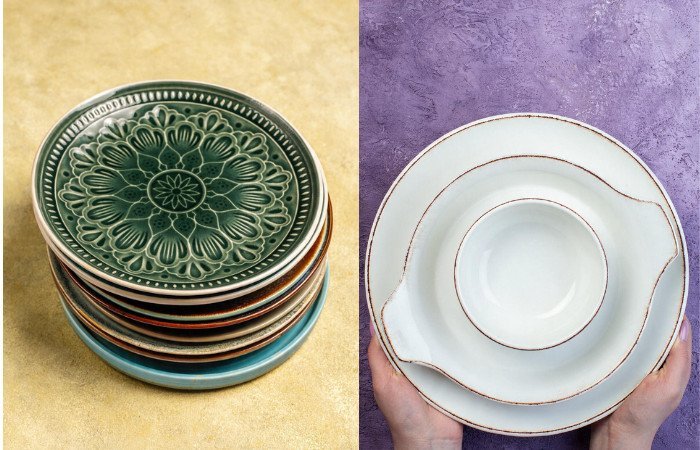
One of the most common misconceptions in the kitchenware world is that porcelain is just a fancy ceramic. Both types of cookware look sleek and come in many beautiful designs.
This guide will explain the essential differences between these two materials when it comes to dinnerware. If you are short of time, scroll down to find the comparison table which includes all important features, so you can find short answers to most of your questions.
Ceramic vs Porcelain Dinnerware: The Quick Answer
Here’s the short version before we dig into the details.
Porcelain is actually a type of ceramic — but it’s made from finer clay, fired at much higher temperatures, and comes out denser, harder, and less porous. Standard “ceramic” dinnerware (often called stoneware or earthenware) uses coarser clay fired at lower heat, which makes it a bit more affordable but also more prone to chipping.
Think of it this way: all porcelain is ceramic, but not all ceramic is porcelain.
Now let’s get into what that actually means for your dinner table.
Difference Between Ceramic and Porcelain Plates: Side-by-Side
Sometimes a table just makes things click faster than paragraphs. Here’s how the two stack up.
| Feature | Ceramic Plates | Porcelain Plates |
|---|---|---|
| Clay type | Coarser natural clay | Fine kaolin clay |
| Firing temperature | ~1,700–2,200°F | ~2,200–2,600°F |
| Porosity | More porous | Very low porosity |
| Thermal shock resistance | More sensitive to temperature changes | Can tolerate large temperature swings |
| Dishwasher / microwave / oven | Dishwasher and microwave safe | Dishwasher and microwave safe; many are oven safe |
| Durability and chip resistance | Moderate, prone to chipping | High, 40–50% better chip resistance than ceramic |
| Lifespan | 5–10 years depending on quality | 10–20+ years with proper care |
| Weight | Heavier, thicker | Lighter, thinner |
| Appearance | Rustic, textured, opaque | Refined, smooth, often translucent |
| Stain & odor resistance | Can absorb liquids over time if glaze is damaged | Non porous body resists staining and odors |
| Design variety | Very high; many styles, colors, patterns, and artisanal finishes | Elegant, refined styles; fewer design options |
| Best use cases | Daily family meals, casual dining | Formal dining, restaurants |
| Price | Generally more affordable | Generally pricier |
| Best for | Everyday, casual use | Formal dining, heirloom sets |
Which Plates Are More Fragile?
This one surprises people. You’d think the thinner, more delicate-looking porcelain would break easier, but it’s actually the opposite in most cases.
Because porcelain is fired at such high heat, it becomes extremely dense and hard, which makes it more resistant to chipping and cracking under everyday wear. Ceramic, being more porous and coarser in structure, is more likely to chip along the edges or crack if it takes a hard knock.
That said, porcelain isn’t indestructible — if it does break, it can shatter more dramatically because it’s harder and less flexible. Ceramic tends to chip in smaller, less catastrophic ways.
Bottom line: porcelain resists everyday chips better, but a hard enough drop can crack either one.
Which Plates Last Longer, Ceramic or Porcelain?
If longevity is your main concern, porcelain generally wins. Its low porosity means it doesn’t absorb moisture, odors, or stains the way ceramic can over time. That density also means it holds up better to years of stacking, scrubbing, and daily handling.
Ceramic dinnerware can still last for many years with reasonable care — plenty of people have ceramic sets that have survived a decade or more — but it’s more likely to show wear: small chips, faded glaze, or hairline cracks from thermal shock (rapid temperature changes).
Are Ceramic or Porcelain Plates Better for Everyday Use?
Here’s where personal priorities come into play.
Ceramic plates are often better for everyday use because:
- They’re generally more budget-friendly, so chips and breaks sting less
- Their thicker build feels sturdy and casual
- They come in a huge range of fun, artisan-style designs
Porcelain plates can also work great for daily use if:
- You want dinnerware that looks nice without a lot of upkeep
- You prefer something lighter to lift and stack
- You don’t mind spending a bit more upfront for something that lasts
Honestly, plenty of households mix both — porcelain for the “good” dishes, ceramic for the everyday grind.
Can Ceramic Plates Go in the Microwave?
In most cases, yes. Most glazed ceramic dinnerware is microwave-safe, since ceramic itself doesn’t contain metal and won’t spark. However, always check for a microwave-safe symbol on the bottom of the plate, since some decorative glazes contain metallic accents (like gold or silver trim) that absolutely should not go in the microwave.
Also worth noting: ceramic’s porous nature means it can retain heat unevenly, so plates might come out with hot spots.
Can Porcelain Plates Go in the Microwave?
Yes, plain porcelain is generally microwave-safe too, thanks to its dense, non-porous structure. Just like with ceramic, avoid pieces with metallic trim or hand-painted metallic glazes, since those can cause sparking.
If you’re ever unsure, a simple rule works for both materials: no metallic decoration, no cracks, no gold/silver rims = safe to microwave.
Are Ceramic Plates Dishwasher Safe?
Most modern ceramic dinnerware is labeled dishwasher safe, but there are a few things to keep in mind:
- Hand-painted or antique ceramic pieces may fade faster with repeated washing
- Porous, unglazed ceramic (like some rustic or artisan pieces) should ideally be hand-washed
- Always check the manufacturer’s instructions first
Are Porcelain Plates Dishwasher Safe?
Yes, and porcelain generally handles dishwasher cycles even better than ceramic because of its lower porosity and higher durability. It resists staining, holds its glaze longer, and doesn’t absorb detergent residue or food odors as easily.
Fine china with gold or platinum trim is the exception — those pieces are usually better off hand-washed to protect the metallic detailing.
Are Ceramic and Porcelain Plates Food Safe?
Yes, both are considered food safe when properly manufactured and glazed. The glaze creates a protective, non-porous barrier between the food and the clay body underneath.
That said, food safety really comes down to quality and origin. Reputable brands follow safety regulations for glazes and finishes, but cheaply made or imported decorative pieces (especially older or antique items) can sometimes use glazes with unsafe additives. Cheap or unregulated imports can use low-quality glazes that may contain trace amounts of heavy metals. This brings us to the next big question.
Do Ceramic or Porcelain Plates Contain Lead?
This is a legitimate concern, and it’s worth understanding clearly.
Some glazes — not the clay itself — have historically contained lead or cadmium to achieve certain colors or a glossy finish. This applies to both ceramic and porcelain dinnerware, not one material specifically.
In the United States, dinnerware sold today must meet FDA limits on lead and cadmium leaching. However, risk increases with:
- Vintage or antique dishware (especially pre-1970s pieces)
- Handmade or imported pottery without safety certification
- Brightly colored glazes, especially reds, oranges, and yellows
How to stay safe:
- Buy from reputable, established brands
- Look for “lead-free” labeling
- Avoid using vintage decorative plates for regular food service
- If concerned, at-home lead testing kits (sponzored link to Amazon) are widely available and affordable
Which Is Better Value: Ceramic or Porcelain Plates?
“Value” depends on how you define it — cheaper upfront, or better over time?
| Consideration | Ceramic | Porcelain |
|---|---|---|
| Upfront cost | Lower | Higher |
| Cost per year of use | Can be higher if chips occur often | Lower due to durability |
| Replacement frequency | More frequent | Less frequent |
| Best value for | Budget-conscious, casual households | Long-term investment, formal sets |
If you want the lowest possible sticker price, ceramic wins. If you’re thinking long-term and don’t want to replace pieces every couple of years, porcelain often ends up being the better value.
Are Ceramic or Porcelain Plates Better for Families With Children?
For households with kids (or anyone prone to the occasional dinner-table mishap), ceramic often gets the nod — but not for the reason you’d expect.
It’s not that ceramic doesn’t break; it’s that it’s usually cheaper to replace when it does. A dropped ceramic plate feels like a minor inconvenience. A dropped, expensive porcelain piece feels like a small tragedy.
If you have young kids, consider:
- Melamine or plastic dinnerware for the youngest ones
- Simple, inexpensive stoneware or ceramic sets for family meals
- Saving porcelain for special occasions or once kids are a bit older
Which Plates Are Better for Formal Dining?
This one’s pretty clear-cut: porcelain is the classic choice for formal dining. Its refined look, smooth finish, and slight translucency have made it the standard for fine china for centuries. Think holiday dinners, wedding registries, and heirloom sets passed down through generations.
Ceramic can still look elegant, especially modern matte or textured designs, but if you’re setting a formal table, porcelain (or bone china, a close relative) is the traditional and safest choice.
Are Ceramic or Porcelain Plates Better for Outdoor Use?
Neither material is ideal for rough outdoor conditions like patio dining, camping, or poolside gatherings, but if you had to choose, ceramic is generally more forgiving outdoors simply because it’s less expensive to replace if something goes wrong.
For true outdoor entertaining, though, most experts (and common sense) point toward:
- Melamine dinnerware, which mimics the look of ceramic without the breakage risk
- Bamboo or acacia wood plates for a natural, durable option
- Plant-based, biodegradable plates made from wheat straw, sugarcane, or palm leaves
- Enamelware for a retro, rugged look that can take a hit
If you love the look of ceramic or porcelain for an outdoor table, just handle with extra care and skip it for high-traffic gatherings with lots of movement.
Are Expensive Porcelain Plates Worth It?
This is the million-dollar question for anyone eyeing a beautiful, higher-end porcelain set.
Arguments for purchase:
- High-quality porcelain genuinely lasts longer and resists everyday wear better
- It photographs beautifully, which matters if you host often or love a good table setting
- Well-made sets can become heirlooms, passed down for generations
- Better craftsmanship often means better weight balance and finish
Arguments for holding back:
- Everyday use increases the odds of chips regardless of quality
- Mid-range porcelain often performs nearly as well for typical households
- If you don’t host formally very often, the premium may not be worth it
A good middle ground many people land on: invest in a smaller, quality porcelain set for special occasions, and keep a more affordable ceramic or stoneware set in daily rotation.
How to Tell if a Plate Is Ceramic or Porcelain
Not sure what’s already in your cabinet? Here are a few easy checks:
- Hold it up to the light. Porcelain often shows a slight translucency around the edges; ceramic stays completely opaque.
- Check the weight. Ceramic tends to feel heavier and thicker for its size; porcelain feels lighter and thinner.
- Tap it gently. Porcelain typically produces a clear, ringing sound. Ceramic tends to sound more dull or muted.
- Look at the color of the base. Unglazed porcelain is usually bright white throughout; ceramic often shows a tan, gray, or reddish clay body underneath the glaze.
- Check the bottom for markings. Many manufacturers stamp “porcelain,” “stoneware,” or “fine china” right on the base.
So, which Plates Fit Better for Your Table?
There’s no universal winner here — it really comes down to how you live and eat.
- Want something budget-friendly, casual, and full of character? Go ceramic.
- Want something refined, durable, and built to last for special occasions (or every day, if your budget allows)? Go porcelain.
Many kitchens end up with a mix of both, and that’s honestly the smartest approach: casual ceramic pieces for daily meals, and a porcelain set tucked away for holidays, dinner parties, and the moments that call for a little extra polish.
Whatever you choose, understanding the difference allows you to shop smarter, take proper care of your cookware, and get the most out of each plate.

About the Author
Hi, I’m the creator of Two Tiny Spoons. I am a retired researcher who has spent over 10 years obsessing over cookware materials, food safety, and manufacturing standards. I don’t care about fancy recipes—I care about the science behind the tools we use. I independently vet every product to ensure it is non-toxic, durable, and truly worth your money.