
What is Cooking Spray?
Cooking spray typically consists of an oil (such as canola oil, olive oil, or avocado oil), an emulsifier, a propellant, and an antifoaming agent. These ingredients are pressurized in a can, allowing the aerosol spray to come out and evenly coat the pan or food. Cooking spray coats the pan with a thin, even layer, preventing food from sticking.
Cooking sprays first appeared on the market in 1961 and quickly became a staple in every kitchen as a convenient, low-calorie alternative to butter and bottled oil. For people who are short on time, cooking spray is a convenient solution that simplifies both cooking and cleaning tasks.
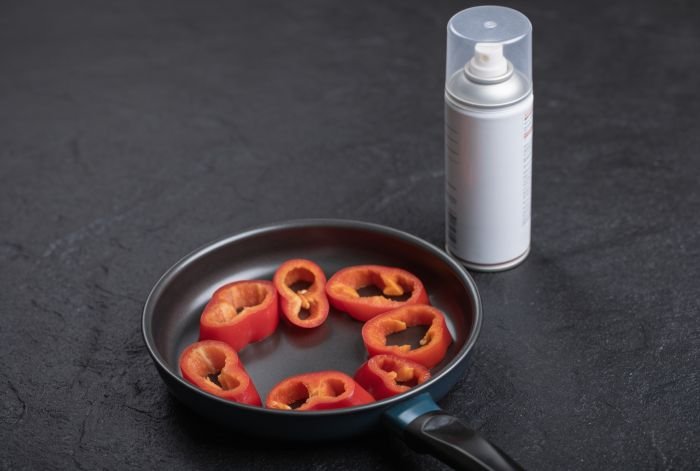
Advantages of Cooking Sprays
When compared to cooking oil, cooking spray has several advantages:
- Fewer calories: The popularity of cooking sprays stems from their ability to help you prepare dishes with fewer calories than using regular oil. Cooking spray is applied in a thin layer, making food less greasy. A one-second spray can contain only two to five calories, while one tablespoon of olive oil contains 120 calories.
- Even coating: Cooking spray creates an even, thin layer of oil on pans, baking sheets, or muffin tins, preventing sticking without adding excess grease. Another significant advantage is consistency. Cooking spray ensures that every bite is cooked evenly, especially for baking or grilling.
- Precise control: Cooking sprays deliver an ultra-fine mist to coat your pan. Instead of pouring too much oil and ending up with greasy food, you can coat your pans, vegetables, or salads evenly and lightly. Spraying delivers only a small amount of fat compared to pouring liquid oils or rubbing butter directly onto the pan. There’s minimal waste because there is less chance of pouring more than you need.
- Easy Cleanup: Using cooking spray reduces the time it takes to clean dishes. Pouring oil creates more mess, making dishes and kitchen surfaces greasy and sticky. Cooking sprays offer a cleaner experience in the kitchen.
- Versatile and easy to use: Cooking sprays can serve for a variety of cooking methods, including frying, air frying, grilling, and sautéing. You can spray baking pans instead of buttering. The ergonomic design allows for fine, continuous spraying with gentle pressure.
Disadvantages of Cooking Sprays
Not all aspects of cooking sprays are beneficial. Potential disadvantages include negative effects on non-stick cookware, fire hazards, and the presence of health-damaging chemicals.
- Degradation of non-stick surface: Non-stick cooking sprays can leave a sticky layer on the cookware surface that is difficult to remove. Soy lecithin, which is added as an emulsifier, can also lead to a build-up of sticky mass in the pans. This layer can reduce the non-stick capability of your pans. Furthermore, ingredients in cooking sprays, especially propellants and chemical additives, can be aggressive to the delicate surface of non-stick pans. Regular use of cooking sprays may cause damage and degrade the non-stick coating. Aerosol sprays are also a leading cause of damage to air fryer baskets because the chemicals they contain may cause the non-stick coating to peel.
- Fire hazards: Cooking sprays can be a hazard when used near a heat source or open flame, such as a lit grill or gas burner. These sprays may contain pressurized propellant gases that are highly flammable, such as propane, butane, and isobutane. Storing the spray near an open flame or active burner may cause an explosion. Additionally, when the nozzle is pressed, the fine mist can easily ignite if exposed to an open flame or high heat source, creating a significant fire hazard.
- Altered taste: Many people who have tried both cooking spray and oil say that food may not taste as good when prepared with cooking spray. However, this can vary since cooking sprays are available in different flavors, allowing customers to choose the one with the desired flavor.
Is Cooking Spray Healthy?
However, cooking sprays, often advertised as a healthier alternative for cooking, actually contain concerning ingredients. In addition to propellants, they may also have foaming agents, emulsifiers, and flavoring agents, all of which can pose health risks.
Risks of Consuming Propellant Gas
One of the most problematic issues with using cooking spray is the presence of chemical propellants. Upon inspecting the list of ingredients, you may find that butane, isobutane, propane, or carbon dioxide are included. These propellants are used to create pressure inside the can to disperse the spray. However, when inhaled or swallowed, they can irritate the respiratory system, leading to coughing, shortness of breath, and other respiratory problems. Additionally, some propellants have been linked to neurological issues and can negatively impact the central nervous system. Choosing bottled oil is a safer option that eliminates these potential health risks.
Foaming Agents
Sprays often contain chemicals that prevent oils from foaming. Dimethylpolysiloxane is a commonly added chemical in sprays that helps prevent oil from bubbling and splashing when heated. This ingredient is also used as a paint additive, a textile finishing agent, and in cosmetic products. The health implications of ingesting dimethyl silicone have not been extensively researched. However, some people are not comfortable knowing they are consuming the same ingredient that is used in the production of paints and cosmetics.
Flavoring Agents
Diacetyl is a chemical flavoring agent frequently used in cooking sprays to impart a buttery flavor. While it is safe to ingest, inhaling heated diacetyl vapors is linked to a higher risk of lung disease. As a result, many manufacturers have stopped using this chemical, as long-term or repeated exposure can lead to respiratory illnesses. Acetoin is also commonly used to replicate the rich flavor of dairy products without the use of actual butter. It is crucial to avoid inhaling the spray, as repeated exposure to acetoin in manufacturing settings may result in respiratory issues for workers.
Environmental Impacts of Conventional Cooking Sprays
Some propellant gases that were previously used in aerosol products were harmful to the ozone layer. Although hydrofluorocarbons (HFCs) currently in use do not damage the ozone layer, they still have negative environmental effects. The hazards linked to HFCs include global warming, flammability risks, and ecotoxicity.
Pressurized aerosol cans are primarily made from steel or aluminum. Aerosol cans are not reusable, and residual oil and propellant can complicate the recycling process, often resulting in them ending up in landfills.
Healthy Alternative to Cooking Sprays
Oil Misters
An oil sprayer or oil mister is a reusable, non-aerosol dispenser that converts your favorite cooking oil into a fine, even mist. Unlike disposable cans that rely on chemical propellants, a refillable spray bottle uses air pressure to work. This is a sustainable and eco-friendly way to use your favorite oil instead of buying a single-use can. Unlike the single-use spray cans that contain questionable chemicals, you know exactly what is inside your oil sprayer. You can fill it with your preferred oil, like olive or avocado oil. Coconut oil is not an option, as it can harden up when the temperature cools down and clog your sprayer.

Oil misters can be made of glass is a popular choice because it’s durable and won’t absorb flavors or chemicals. Stainless steel is also excellent for protecting oil from light, which can help it stay fresh for longer.
Negative aspects include manual pumping and regular cleaning. The pure oil can cause the spray to come out as a stream or heavy droplets rather than a consistent, airy mist.
Related product: OLIVIA SIGNATURE Advanced Kitchen Oil Sprayer (link to Amazon)
Refillable Oil Spray Bottles with Dual Function
Bottles with dual function allow you to switch between misting and pouring. This versatile kitchen tool offers both spray and pour options for better control while cooking. The nozzle delivers a fine mist or steady stream, making it easy to control how much oil you use. Whether you need a precise cooking spray for air frying or a controlled pour for stir-fries, a refillable oil spray bottle is a practical addition to your kitchen.
Oil spray bottles do not rely on aerosol propellants or chemical additives, enabling you to spray pure, additive-free oils.
Bottles can be made of dark green glass to protect the oil from exposure to light and preserve its freshness longer.
Disadvantages:
Occasionally, a slightly uneven mist can appear with thicker oils, and the trigger needs to be squeezed hard, which can be a problem for people with weak hands. Also, hand washing is the only cleaning option.
Related product: CXINYI – 16oz/470ml Olive Oil Dispenser (link to Amazon)
Takeaway
While cooking sprays offer a handy way to coat your cookware, they can lead to ingestion of potentially harmful additives that are present in many aerosol-based sprays. To stay on the safe side, try to use oil misters, which can be filled with pure oil of your choice, or buy oil in a spray bottle that offers both spraying and pouring.

About the Author
Hi, I’m the creator of Two Tiny Spoons. I am a retired researcher who has spent over 10 years obsessing over cookware materials, food safety, and manufacturing standards. I don’t care about fancy recipes—I care about the science behind the tools we use. I independently vet every product to ensure it is non-toxic, durable, and truly worth your money.