
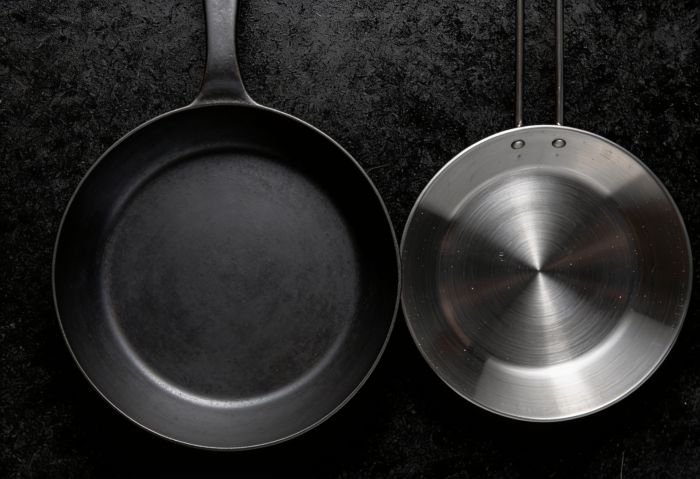
Picture this: you’re standing in the kitchen aisle, staring at two pans that look kind of similar but apparently have completely different features. One’s shiny. One’s dull and almost matte. A store clerk tells you one is “basically nonstick if you season it” and the other is “the workhorse every chef swears by.” But you are actually confused.
That’s the carbon steel vs stainless steel pan debate in a nutshell, and honestly? It trips up a lot of home cooks. Both pans are fantastic. Both pans are also totally different tools that happen to look like they belong in the same drawer.
So let’s slow down and actually talk this through, like two people chatting over coffee instead of a confusing product label.
First Things First: What Even Are These Pans?
Carbon steel is basically a close cousin of cast iron. It’s made from iron and a small amount of carbon, which makes it lighter than cast iron but just as tough. It needs seasoning (more on that soon), and it develops a natural, non-stick surface over time.
Stainless steel, on the other hand, is a mix of steel, chromium, and usually nickel. That chromium is the magic ingredient — it forms a thin, invisible layer that stops rust in its tracks. No seasoning needed.
Here’s a quick side-by-side so you’re not lost:
| Feature | Carbon Steel Pan | Stainless Steel Pan |
|---|---|---|
| Weight | Lighter | Heavier |
| Nonstick surface | Yes, once seasoned | No, needs oil/fat |
| Maintenance | Moderate (needs seasoning) | Low |
| Heat-up speed | Fast | Slower |
| Reactive to acidic foods | Yes | Somewhat |
| Best for | Searing, high-heat cooking | Sauces, browning, everyday cooking |
| Price range | Budget-friendly | Wide range, mid to high-end |
Keep this table in your back pocket. We’re going to unpack basically every row of it.
Carbon Steel Pan Pros and Cons
Let’s talk about carbon steel pan pros and cons first, since it’s the pan most people know less about.
The good stuff:
- It heats up fast. Noticeably faster than stainless steel.
- Once seasoned, it gets a naturally nonstick surface that keeps improving with use.
- It’s lighter than cast iron, so tossing food around the pan feels way more natural.
- It handles crazy-high heat without flinching, which is why chefs love it for searing.
The not-so-good stuff:
- It needs seasoning, and if you skip that step, food will absolutely stick.
- It’s a little needy. No soaking it in the sink and walking away.
- New carbon steel can react with very acidic foods, giving your dish a slightly metallic taste.
- It can develop rust spots if you don’t dry it properly.
Basically, carbon steel is like a plant that needs a little attention but rewards you generously when you give it that attention.
Stainless Steel Pan Pros and Cons
Now let’s flip over to stainless steel pan pros and cons.
The good stuff:
- It’s basically indestructible. Drop it, scratch it, it doesn’t care.
- Dishwasher safe (though hand washing keeps it looking sharp longer).
- Doesn’t react with acidic ingredients like tomatoes, wine, or citrus, but it is not recommended to keep acidic food in it for longer periods.
- Great for building fond (those tasty browned bits) for pan sauces.
The not-so-good stuff:
- Food sticks like crazy if you don’t use enough oil or get the pan hot enough first.
- It’s heavier, which can be tiring during a long cooking session.
- Heats up a bit slower and can have hot spots unless it has a thick, quality base.
Stainless steel is the reliable friend who shows up every time, no extra care needed.
Which Is Better: Carbon Steel or Stainless Steel?
Truth is, there’s no single winner here. It depends entirely on what you’re cooking and how much maintenance you’re willing to do.
If you want a pan that’s low-maintenance, dishwasher-friendly, and good for sauces and acidic dishes, stainless steel is your best buy. If you want something that heats fast, sears like a dream, and slowly becomes nonstick over the years, carbon steel is the one.
10 Inch Carbon Steel Pan, Pre-Seasoned (link to Amazon)
Is stainless steel better than carbon steel for everyday use? For most casual, everyday cooking — reheating leftovers, making eggs occasionally, simmering sauces — yes, stainless steel tends to be more forgiving day-to-day.
CAROTE 10″ Tri-Ply Stainless Steel Frying Pan (link to Amazon)
Which Pan Is More Versatile?
This one’s close, but stainless steel edges it out slightly because it goes from stovetop to oven to dishwasher without a second thought, and it plays nice with basically every ingredient, including acidic ones. Carbon steel is versatile too, especially for high-heat tasks, but it asks a bit more of you in return.
Beginners vs. Professional Cooks
Which pan is better for beginners? Stainless steel is usually the friendlier starting point. It’s forgiving, doesn’t need seasoning, and can be tossed in the dishwasher when you’re too tired to hand wash after dinner.
Which pan is better for professional cooks? Carbon steel tends to win in professional kitchens because of how fast it heats, how well it sears, and how light it is for repetitive tossing and flipping motions all day long.
Heat Performance: Speed, Retention, and Distribution
Which pan heats up faster? Carbon steel, hands down. It’s thinner and more responsive to temperature changes.
Which pan holds heat better? Stainless steel, especially thicker versions, holds onto heat a bit longer once it’s hot.
Which pan distributes heat more evenly? This depends on the base. A stainless steel pan with an aluminum or copper core tends to distribute heat impressively evenly. Carbon steel is good too, but thinner spots can occasionally run hotter.
Which pan is better for high-heat cooking? Carbon steel again. It’s built for blazing-hot searing and stir-frying.
Cooking Tasks: What Works Best Where
Let’s get practical, because this is really what matters when you’re standing at the stove.
| Cooking Task | Better Choice |
|---|---|
| Searing steak | Carbon steel |
| Frying eggs | Carbon steel (once seasoned) |
| Sautéing vegetables | Either works, carbon steel slightly better |
| Pan sauces | Stainless steel |
| Delicate foods (fish fillets, crepes) | Carbon steel, once well-seasoned |
| Browning meat | Stainless steel (great fond for sauces) |
| Fish | Carbon steel for crispy skin |
| Chicken | Both work, stainless for sauce-based dishes |
| Frying | Carbon steel |
| Roasting | Stainless steel, oven safe and sturdy |
So which pan is better for searing steak? Carbon steel, because it reaches and holds very high heat, giving you a deep, caramelized crust.
Which pan is better for frying eggs? Once it’s properly seasoned, carbon steel becomes shockingly nonstick, so eggs slide right off.
Which pan is better for sautéing vegetables? Both do the job well, but carbon steel’s fast heat response gives you a little more control.
Which pan is better for pan sauces? Stainless steel wins here. Its surface builds up flavorful browned bits (chefs call this “fond”) that turn into incredible sauces once you deglaze the pan with wine or broth.
Which pan is better for delicate foods? A well-seasoned carbon steel pan can handle delicate fish and eggs beautifully without tearing them apart.
Which pan is better for browning meat? Stainless steel again, since it doesn’t hide that gorgeous golden crust and lets you build flavor for later.
Is Carbon Steel Naturally Nonstick? Is Stainless Steel Nonstick?
Is carbon steel naturally nonstick? Not right out of the box, no. It needs to be seasoned first, meaning you build up a layer of polymerized oil on the surface. Once that’s done, it behaves a lot like nonstick cookware.
Is stainless steel nonstick? Nope, not even close. It relies on proper heating and enough oil or butter to prevent sticking. Once you learn the “hot pan, cold oil” trick, though, it becomes way less frustrating.
Maintenance and Cleaning
Is carbon steel harder to maintain than stainless steel? Yes, a bit. It requires seasoning, careful drying, and occasional reseasoning if food starts sticking again.
Can you wash carbon steel with soap? A small amount occasionally is fine with modern soaps, despite the old myth that soap ruins seasoning. Just don’t scrub it aggressively or let it soak.
Can you put carbon steel in the dishwasher? Please don’t. It’ll strip the seasoning and can cause rust.
Can you put stainless steel in the dishwasher? Yes, most stainless steel pans handle the dishwasher just fine, though hand washing keeps that shine looking newer for longer.
Durability and Safety
Which pan is more durable? Both are incredibly tough, but stainless steel is more forgiving of dishwasher cycles, dings, and years of casual use without special care.
Is carbon steel safe for cooking? Absolutely, it’s a trusted material used in professional kitchens worldwide.
Is stainless steel safe for cooking? Yes, completely safe and one of the most commonly recommended cookware materials by cooking experts.
Which pan is more resistant to corrosion? Stainless steel, thanks to that chromium layer that actively prevents rust.
Oven Safety and Stovetop Compatibility
Are carbon steel pans oven safe? Yes, typically up to very high temperatures, especially if the handle is fully metal.
Are stainless steel pans oven safe? Also yes, and usually to even higher temperatures, making them great for stovetop-to-oven recipes.
Which pan is better for induction cooktops? Both work well on induction as long as they’re magnetic, which most carbon steel and many stainless steel pans are.
Which pan is better for gas stoves? Both perform great on gas, though carbon steel’s fast heat response feels especially satisfying with an open flame.
Cooking Acidic Foods
Can you cook acidic foods in carbon steel? You can, but it’s better to wait until the seasoning is well-established. New or thin seasoning layers can react with tomatoes, wine, or vinegar and affect the taste.
Is stainless steel better for acidic foods? There are many claims that stainless steel doesn’t react with acidic food, making it the safer choice for tomato sauces, braises, and citrus-based dishes. But some research finds that the tomato sauces can cause nickel and chromium leaching from stainless steel into the tomato sauce, depending on the grade of stainless steel, cooking time, and previous usage of the stainless steel.
Value for Money and Popular Brands
Which pan is better value for money? Carbon steel often wins here, since quality options are usually more affordable than premium stainless steel cookware, and it lasts for decades with basic care.
What brand of carbon steel pan is best? Popular, well-loved options among home cooks include Matfer Bourgeat, de Buyer, and Lodge, all known for solid construction and even heating.
What brand of stainless steel pan is best? Cooks frequently recommend All-Clad, Tramontina, and Cuisinart for their multi-layered, heat-conductive bases.
A Few More Everyday Questions
Which pan is lighter to handle? Carbon steel, by a noticeable margin, which is part of why professional cooks prefer it for constant tossing and flipping.
Which pan is better for oven-to-stovetop cooking? Stainless steel edges ahead here since it handles high oven temperatures reliably and transitions smoothly without needing re-seasoning afterward.
Which pan is better for meal prep? Stainless steel, mainly because of the easy cleanup and dishwasher compatibility when you’re cooking in bulk.
So, Which One Should You Actually Buy?
Here’s the truth: most serious home cooks eventually end up owning both. They’re not really competitors — they’re teammates. Carbon steel handles the searing, the eggs, the stir-fries, and the high-heat drama. Stainless steel handles the sauces, the braises, the acidic dishes, and the low-maintenance everyday cooking.
If you can only pick one right now, ask yourself this: do you want a pan that needs a little relationship-building (carbon steel), or one that’s ready to go the moment you unbox it (stainless steel)? Either way, you’re upgrading your kitchen game, and that’s the part that really matters.

About the Author
Hi, I’m the creator of Two Tiny Spoons. I am a retired researcher who has spent over 10 years obsessing over cookware materials, food safety, and manufacturing standards. I don’t care about fancy recipes—I care about the science behind the tools we use. I independently vet every product to ensure it is non-toxic, durable, and truly worth your money.