
What Is Gold Electroplate Flatware
Gold-plated flatware is made of stainless steel with a thin layer of real gold applied to the base metal. Plating is almost always carried out by electroplating technique when stainless steel cutlery is submerged in a solution containing gold ions. The electroplating process causes gold to chemically bond with the steel surface and form a thin, homogenous layer. Because it’s measured in microns, the technology gives it a true gold but very fine coating. The gold coating creates a stunning look but is not durable enough for daily use.
What Is PVD Treated Gold Flatware
PVD or physical vapor deposition, is an advanced vacuum deposition technique used to apply durable and gold-colored coating to stainless steel cutlery. This technique creates a stunning, hard and scratch-resistant finish which is much more resistant than traditional gold-plating and is suitable for frequent use. Although this coating method improves the resistance, durability and visual appeal of the cutlery, it produces flatware which is colored like gold rather than flatware with genuine gold plating.
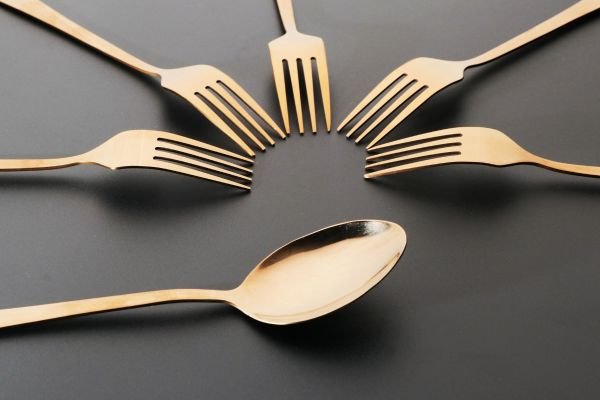
Is Gold Plated Flatware Dishwasher Safe
Always check the instructions for care before purchasing. If it says only hand wash, it’s probably a traditional plated finish. The traditional technique of electroplating gold flatware gives a beautiful effect at a reasonable price, but it is not durable enough for daily dishwasher use. Some manufacturers label their gold-plated cutlery as being “dishwasher safe. The truth is that very thick, high-quality plating can tolerate a few dishwasher cycles, but if you regularly put gold plated flatware in the dishwasher, long-term damage is likely. This happens for several different reasons:
- Gold is a soft metal and the surface gold layer is very thin.
- Furthermore, many dishwasher detergents are abrasive and rough. They can wear away the gold plating and discolor the surface.
- The intense heat generated by the washing cycle also can weaken the gold plating.
- Finally, the thin layer of gold can be worn away by the abrasions caused by mechanical processes and other objects smashing into it.
Therefore, in order to avoid damage and to preserve the integrity of the flatware, it is preferable to avoid the dishwasher. Fortunately, gold electroplated cutlery is easy to clean by hand. To ensure its longevity and beauty, follow these basic instructions for maintenance.
- Avoid harsh chemicals and abrasive cleaning products as they may damage gold plating. Instead, use a mild cleaning agent and soft sponge to wash your gold flatware by hand.
- Use warm water to thoroughly rinse.
- To avoid scratching, do not use steel wool, scratching pads or sharp objects.
- Do not leave utensils with residual acid or salt for a long time.
- To avoid water spots, immediately dry off with a soft towel.
- Keep in a dry place. Store separately from other metals to avoid scratching. To prevent scratches when the pieces are stored together, consider covering each piece with a protective covering.
PVD treated gold flatware set (Link to Amazon)
What Kind of Gold Flatware can Go in the Dishwasher
PVD treated gold flatware is the right choice when you need elegant gold flatware for your home or commercial use, but you don’t want to wash it every day by hand. Physical vapor deposition, or PVD, is a high-tech coating technique that creates a finish that is dishwasher-safe, durable and scratch-resistant. It offers the strength needed for permanent, daily use, while preserving the appearance of gold. This type of gold plate has a golden color but is much harder than real gold. This means that PVD gold flatware can withstand high temperatures and harsh detergents in the washing machine, as well as scratches from frequent use. For those who want the beauty of gold without the need for care, this is the perfect opportunity.
Although PVD-coated flatware can be washed in the washing machine, it is recommended to wash them manually with a mild detergent to extend their life. Just be careful not to use citrus-based cleaners.
Does Gold Cutlery Last
One of the main concerns with gold electroplate flatware is whether the gold finish will fade over time. Gold cutlery made with a light coating of true gold on stainless steel is less resistant and more likely to wear off, exposing the base metal underneath. The durability of gold plating cutlery depends on the thickness and proper maintenance. High-quality gold-plated flatware with thicker coating is more resistant to damage and can sustain regular use with proper care.
Try to find out the details about the thickness of the plate when purchasing a plate with gold plating.
With the use of high-tech techniques such as physical vapor deposition (PVD), PWD-treated or gold-colored flatware is created, giving it a luxurious look without the expense of real gold. There’s no real gold plating on stainless steel. In fact, gold is usually not used in the process. Compared to traditional gold electroplated flatware, PWD-treated or gold-tinted flatware is much more durable. It is scratch-resistant and dishwasher-safe and will outlast gold plated cutlery.
PWD-treated or gold-tinted flatware is significantly more expensive than conventional gold electroplated flatware.
Is it Safe to Eat with Gold Flatware
One of its major advantages of gold flatware is that it is completely non-toxic. As gold is non-reactive and does not pose any health risk, it is generally safe to use gold-plated silverware with food. The tiny traces of gold wouldn’t be dangerous even if they fell and were ingested. In fact, because gold is biocompatible, it is often used in a wide range of medical applications.
In addition, the gold layer may reduce allergic reactions in some users by reducing contact with nickel or other reactive alloys in the base metal.
PVD-coated flatware are safe for everyday use as they are hypoallergenic and release no dangerous materials. By acting as a barrier layer, titanium dioxide (TIN) PVD reduces the chemical interactions with the base metal of the flatware.
Gold Plastic Cutlery
Produced from food grade polystyrene, gold plastic silverware is similar to genuine silverware which is engraved in gold. They have a beautiful sheen as you might expect from metal. The lustrous gold color of these plastic cutlery adds a beautiful touch to the meetings and the celebrations. They feel sophisticated and can add a dash of color and class to your special occasion. These beautiful flatware are also ideal for everyday use in the office dining room or in the home. Weddings, birthdays, anniversaries, baby showers, barbecues and holiday parties are just a few of the events they are perfect for. These cutlery are tough, light, and surprisingly long-lasting. They will not break easily when cut into a meal. They are suitable for both warm and cold meals. Plastic gold cutlery is suitable for disposable use, but you can handwash them to reuse.
Gold Plastic Silverware for party (link to Amazon)
Does Gold Plated Flatware Tarnish?
Flatware with a gold plating won’t tarnish. Since gold is non-reactive, genuine gold cutlery does not tarnish. One of the reasons gold is valued for its use in jewelry is its resistance to corrosion. With typical wear, a gold coating on stainless steel can hold its color for years; it may exhibit scratches but rarely “tarnish” in the traditional sense. However, if the thin layer of gold wears off and the base metal is exposed to air and moisture, gold-plated cutlery may become worn out or lose its luster.
Cutlery with a PVD coating is remarkably resistant to corrosion and scratches, and its surface is also impervious to acidic substances. PVD coating forms a protective barrier against corrosion, improves the wear resistance, and maintains its shiny appearance, even after years of use.
Downsides of Gold-Plated Flatware
- Gold-colored silverware is significantly more expensive than stainless steel. PVD-treated flatware is even more costly than gold-plated cutlery.
- The gold layer on gold plated flatware may eventually wear off, particularly after repeated use, which is another disadvantage. Gold is a soft metal. Frequent use may cause surface discoloration and scratches.
- Flatware with gold plating must be stored in a careful manner to avoid scratching and contact with other types of utensils which may cause scratching.
- High carbon or serrated kitchen knives have a better cutting performance and a longer edge life than gold-plated knives.
Conclusion
In summary, gold flatware offers unmatched aesthetic and practical benefits. Its non-toxic nature and resistance to corrosion make it a reliable choice for those who appreciate quality in their dining experiences.
For special occasions where you want that true gold shine, use gold electroplated flatware. For commercial use or for daily dining, PVD plated flatware or stainless-steel is more practical option.

About the Author
Hi, I’m the creator of Two Tiny Spoons. I am a retired researcher who has spent over 10 years obsessing over cookware materials, food safety, and manufacturing standards. I don’t care about fancy recipes—I care about the science behind the tools we use. I independently vet every product to ensure it is non-toxic, durable, and truly worth your money.