

Induction cooktops have grown in popularity over the last decade due to their instant heat-up capabilities and energy-saving potential. Induction technology uses rotating magnets to transfer heat directly to the cookware, without heating the cooktop surface. Induction cooktops appear to have the potential to become the cooking appliance of choice in both commercial and home kitchens.
How Does an Induction Hob Work
Induction cooking uses a high-frequency electromagnet that creates a magnetic field beneath a glass-ceramic surface when the device is turned on. The heat is transferred to the pan while the ceramic glass surface remains cool. When you place ferromagnetic cookware over a magnetic field, it heats up. The heat generated in the device cooks the food inside. Because the energy is concentrated on the cookware and transferred to the food, the cooking process is quick and cost-effective.
Here’s a concise comparison table: Induction cooktops vs. electric stoves vs. gas stoves.
| Feature | Induction cooktops | Electric stoves | Gas stoves |
| Heat source | The electromagnetic field heats the pan directly. | Electric coils or radiant elements heat the cooktop, then the pan. | Open flame heats the pan directly. |
| Speed | Fastest; water and pans heat very quickly. | Moderate; slower to heat up and cool down. | Fast heat response, but usually less efficient than induction. |
| Temperature control | Very precise and instant. | Less responsive; changes take time. | Very responsive and easy to fine-tune. |
| Energy efficiency | Highest; most heat goes into the cookware. | Better than gas, but less efficient than induction. | Lowest; more heat is lost to the air. |
| Safety | No open flame; cooktop stays cooler. | Safer than gas, but the surface can stay hot. | The risk of open flames and gas leaks makes it the least safe of the three. |
| Cleaning | Easiest; flat surface, spills do not burn on as much. | Easy to wipe, especially glass tops. | Hardest; grates and burners need more cleaning. |
| Cookware needed | Magnetic cookware only, such as cast iron and many stainless steel pans. | Works with most cookware. | Works with almost all cookware. |
| Upfront cost | Usually highest. | Usually lowest or mid-range. | Often mid-range, depending on installation. |
| Running cost | Low to moderate, depending on electricity prices. | Moderate. | Can be lower than electric in some markets, but depends on gas prices. |
| Best for | Speed, precision, safety, and modern kitchens. | Budget buyers and simple everyday cooking. | Cooks who want flame control and prefer traditional cooking. |
Pros of Induction Cooking:
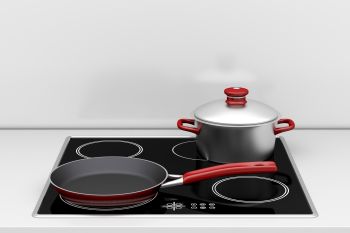
- Fast heating: The pot heats up instantly which can cut cooking times in half.
- Safety: There are no flames. Since the heat only arises in the cookware, you can touch the cooktop surface without the risk of burning yourself. There is also no risk of gas leakage.
- Energy savings: Induction cooktops heat directly into the pot, which saves energy efficiently.
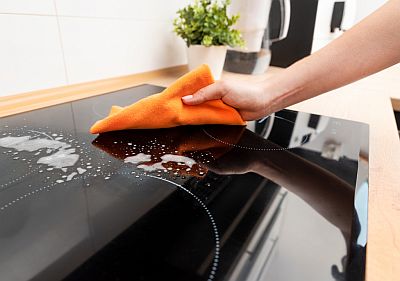
- Cleaning: Cleaning is easy because there are no burnt foods in the pan or liquids spilled onto the cooktop surface.
- Low-fat meals: The food doesn’t stick on the cooking surface, allowing for low-fat cooking.
- Eye-appealing design: Induction hobs look elegant and beautiful and fit perfectly into the modern kitchen interior.
- Instant heat control: Induction cookers respond much more quickly to changes in temperature settings. The pan heats up quickly or cools down instantly as soon as you adjust the temperature.
Cons:
- Induction cookers are more expensive than other cooking surfaces.
- Induction hobs only work with cookware suitable for induction.
- Some brands of induction cookware may produce a humming noise when in use. The Swiss Diamond company claims that its induction-ready line never produces a buzzing noise thanks to a unique manufacturing process.
- Once the glass surface is scratched, it cannot be repaired.
- An induction cooktop requires a dedicated 220V circuit.
What Types of Cookware Are Compatible With Induction Cooktops?
Induction-compatible cookware must be made from metal that supports a magnetic field. Utensils for induction cooking are usually made of cast iron, enameled cast iron, magnetic stainless steel alloy, or any ferromagnetic metal.
Pots and pans suitable for induction must also have a flat base. The not completely flat button would reduce the contact area with the hob. This reduces the efficiency of the entire cooking process.
Cookware made of copper, aluminum, or glass will not work on induction cooktops because these materials are not magnetic.
How to Determine if Your Cookware Is Induction-Ready?
The most common way to determine if your pan is induction-suitable is to perform the magnet test. Place a magnet on the bottom of your cookware. If the magnet sticks to the bottom, the pan works with an induction hob. The newer cooking utensils have an induction symbol on the packaging or on the bottom to indicate compatibility with induction hobs.

How to Use Non-Induction Cookware with an Induction Cooktop?
To use your existing non-ferrous cookware with an induction cooktop, you will need an induction converter disc. When you place the induction converter disc on the induction hob, it becomes a hot cooking surface. You can then place non-magnetic cookware on the hot plate and cook in the same way as on an electric stove.

About the Author
Hi, I’m the creator of Two Tiny Spoons. I am a retired researcher who has spent over 10 years obsessing over cookware materials, food safety, and manufacturing standards. I don’t care about fancy recipes—I care about the science behind the tools we use. I independently vet every product to ensure it is non-toxic, durable, and truly worth your money.